

Women leading UCAM research beyond borders
Martha Cecilia León, Andreia Cruz and María Cuartero, experts in health, biomedicine and sensor technology, are three examples at UCAM highlighted on the occasion of the International Day of Women and Girls in Science.
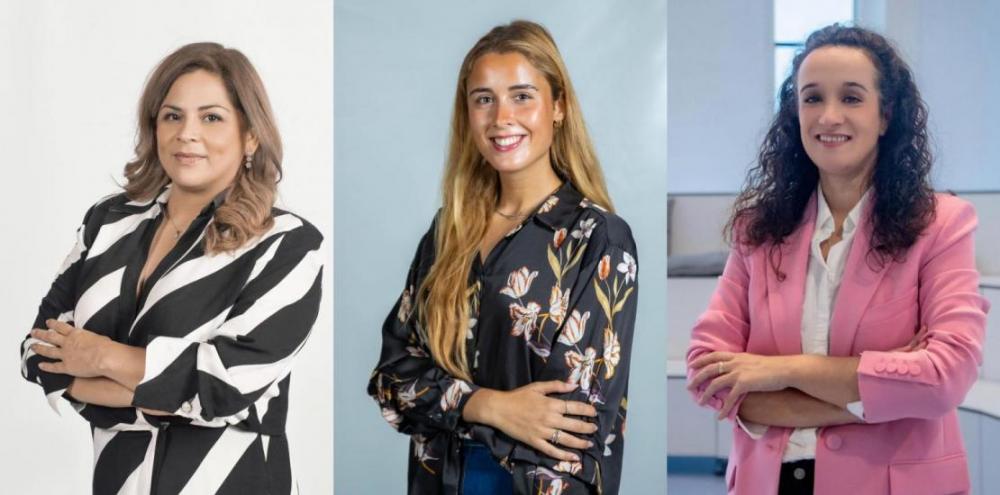

Women have always played an important role in advancing knowledge. From milestones that marked a turning point—such as those achieved by Marie Curie—to the present day, their presence in science has become increasingly visible, robust and decisive in projects with real impact. It was not always this way: for decades, many women researchers faced barriers to entering university, joining laboratories, securing funding or gaining academic recognition, in a context in which their careers often depended on permissions, limited support and exceptional opportunities.
Today, that landscape has changed significantly. In an increasingly collaborative and global system, researcher mobility has become a common and necessary element of scientific work: research stays, international networks and multidisciplinary teams make it possible to move knowledge forward more quickly. Many women scientists now travel between countries and research centres to drive their projects, share expertise and broaden the impact of their results—with determination and courage.
In this context, UCAM strengthens its commitment to showcasing female role models in research through three profiles that reflect the international dimension of the University’s scientific ecosystem. From the HiTech Research and Entrepreneurship Centre, their lines of work range from health and physiotherapy to precision medicine and the development of advanced chemical sensors.
In today’s scientific landscape, these researchers show that international collaboration is essential to turn knowledge into innovation with a positive impact on society.
Martha Cecilia León (Colombia): applied research to improve health and functionality
A physiotherapist and research lecturer at UCAM since 2010, she carries out her work linked to the Degree in Physiotherapy and the PhD Programme in Health Sciences. With a degree in Physiotherapy from the University of Santander (Colombia) and a PhD from the University of Murcia, her career has focused on research with a clear clinical vocation and a strong commitment to transferring results into professional practice.
Her decision to move to Spain was driven by an interest in deepening her research training in an academic environment with a strong tradition in Health Sciences. In this process, she highlights that UCAM’s role in her professional growth “has been key in consolidating my career, allowing me to grow as a researcher, lead projects, establish international networks and actively contribute to the training of new professionals and researchers in physiotherapy”.
She currently focuses her research on therapeutic exercise and manual therapy to improve functionality and quality of life, with special attention to occupational health and musculoskeletal pain. She currently leads a project applied to the professional setting that studies the impact of therapeutic exercise and manual therapy on productivity and work absenteeism.
Andreia Cruz (Portugal): organoid-based biomedicine to advance personalised therapies
A researcher in training, she is completing her doctoral thesis at UCAM. “It was incredible to integrate into the world of research at UCAM, initially thanks to an Erasmus scholarship, then through postgraduate programmes and now by developing my doctoral thesis here,” she explains.
The human dimension has been decisive in strengthening her bond with the institution: “Despite coming from another country, I have always felt welcomed both by the institution and by the people who make it up, which has made me feel happier than at home.” She also notes that this period has enabled her to grow both professionally and personally.
Her research focuses on breast cancer to better understand how the tumour environment influences its evolution. To do so, she works with organoids—three-dimensional models generated in the laboratory that reproduce tissue behaviour and allow the tumour to be studied in detail—within a technologically supportive environment such as UCAM HiTech. Her goal is to “pinpoint the genetic and functional characteristics of the tumour microenvironment” and contribute to future clinical application: “I hope these results will contribute to a better understanding of tumour biology and to the development of more personalised therapies, helping to overcome resistance to current treatments”.
María Cuartero (Murcia, Spain): high-impact chemical sensors with a European outlook
UCAM’s internationally recognised research also extends to cutting-edge technological fields such as the development of electrochemical sensors. In this area, María Cuartero stands out. She holds a degree and PhD in Chemistry from the University of Murcia, is an Extraordinary Full Professor at UCAM, and leads the UCAM-SENS Research Unit. Her career is marked by scientific excellence and international projection, with distinctions such as the award for best doctoral thesis from the Spanish Society of Analytical Chemistry. After completing her PhD, she undertook a three-year stay at the University of Geneva and later moved to KTH in Stockholm, where she held a Marie Curie fellowship—two key stages in boosting her career as an independent researcher. She currently combines the development of multiple research projects at UCAM—including the European ERC Starting Grant project—with her teaching and research work at KTH.
The UCAM-SENS unit, made up of more than 20 researchers and led by Dr Cuartero, focuses on developing scientific solutions with real-world applications. It combines fundamental and applied research to deliver high-quality results that address societal challenges. To this end, it relies on a multidisciplinary team and state-of-the-art infrastructure to drive pioneering projects in chemical sensors with applications in health, sport and the environment.
Role models opening the way
The University underscores the importance of having female research role models and of fostering environments where talent can find opportunities to grow. The trajectories of Martha Cecilia León, Andreia Cruz and María Cuartero reflect a science connected to society: applied to healthcare, focused on understanding complex diseases and oriented towards technological development—always with an international outlook.
Overall, their work reflects a university committed to excellence in research and innovation, as well as in education, while continuously encouraging scientific vocations among younger generations.