

UCAM HiTech promotes applied research in 'Science for Industry'
The UCAM hub participated in this international meeting in Madrid, where it showcased its training programmes that promote scientific entrepreneurship
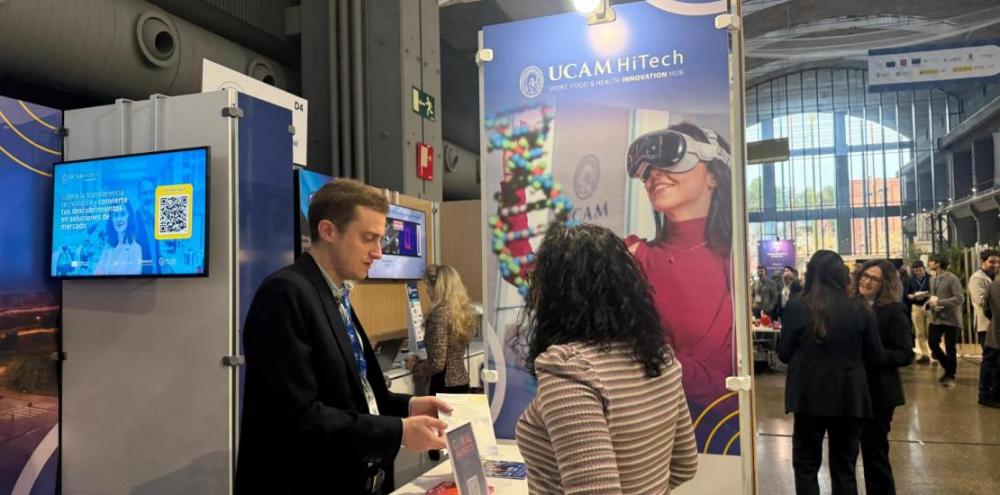

Aiming to ensure that the knowledge generated in universities and laboratories does not remain confined to scientific publications, but also finds ways to be applied and have an impact on society, UCAM HiTech participated in ‘Science for Industry 2026’, one of the leading international science and industry meetings, held this week in Madrid.
At this event, UCAM Hitech presented new training programmes aimed at enhancing the work of researchers, as well as guidance tools to advise them on issues such as conducting research outside the academic environment, creating spin-offs, and financing options for projects in early stages. UCAM HiTech's participation revolved around the central idea of understanding technology transfer not as a bureaucratic procedure, but as a process that requires support, training and context, and that begins long before the creation of a company.
Talent to boost the ecosystem
In addition to its new training programmes, the UCAM HiTech team showcased its main initiatives at 'Science for Industry', such as the scientific entrepreneurship bootcamps and the LifeTech Summit, events designed to accelerate projects, connect talent with investors and generate real opportunities for collaboration.
Transferring science to society
Since its inception, UCAM has been committed to applied research that responds to the needs of society. To ensure this, it launched its high-tech incubator in health, sport and nutrition, ‘UCAM HiTech’, which, despite its short history, has already become a national benchmark: it has supported over 300 start-ups and trained more than 800 people in scientific entrepreneurship – cin areas such as financing, artificial intelligence, marketing and business management – with programmes developed in different autonomous communities and co-financed by European funds. Added to this is the university's own research carried out within the hub itself, through UCAM-SENS and the Molecular Biology Laboratory, among others.