

UCAM brings clinical simulation into medical students’ homes
‘CARMEN’, a device developed by UCAM; a first-of-its-kind initiative in Spain
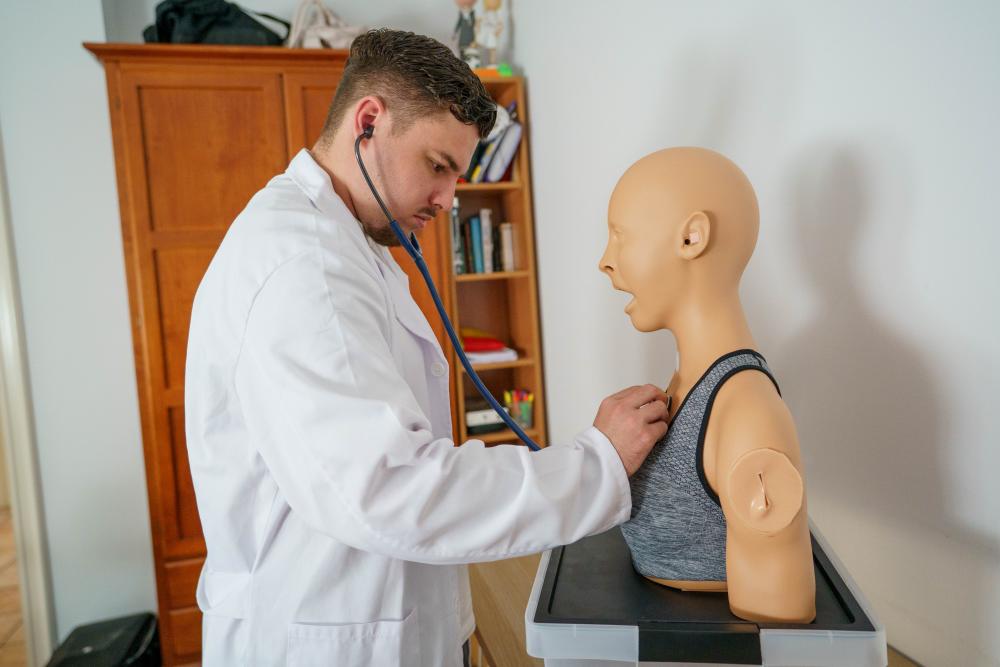

Training to become a doctor requires more than theoretical knowledge: students also need to develop clinical skills. Since its inception, UCAM’s Degree in Medicine has provided students with opportunities to practise these skills in the University’s clinical simulation facilities, both before and during their clinical placements.
Mastering a technique, such as suturing, takes practice: repeating it, identifying mistakes and correcting them until the required level of proficiency is reached. Practising less common scenarios is also an essential part of developing these skills. With this in mind, UCAM has developed a simulator that allows students to continue the training they start with in class at home. Named ‘CARMEN’ by its creators, the device was developed by UCAM in collaboration with Maniquíes Sempere.
Up to 33 simulations
The device consists of a torso-shaped mannequin connected to software, allowing students to practise a range of simulated clinical situations. It offers up to 33 scenarios throughout medical and nursing training.
The initiative begins with a pilot involving third-year Medicine students and is designed to support them through to their sixth year. It is led by Manuel Párraga, Director of UCAM’s Chair of Clinical Simulation and Skills, who conceived the device with a joint Medicine and Nursing team and co-leads the project with instructor Óscar Martínez.
Mastering skills before treating patients
The aim is to allow each student to progress at their own pace, with more opportunities to practise the skills they will need before treating patients. Being able to use the simulator as often as necessary caters for different learning needs and is intended to ensure that everyone achieves the required competencies. Párraga explains that ‘limitations on time, facilities and instructors restrict how often certain techniques can be practised’. Having their own simulator therefore allows students to continue training outside the classroom and make better use of face-to-face teaching time.
García Solano emphasises that the project is tailored to each student because ‘not everyone learns at the same pace’.
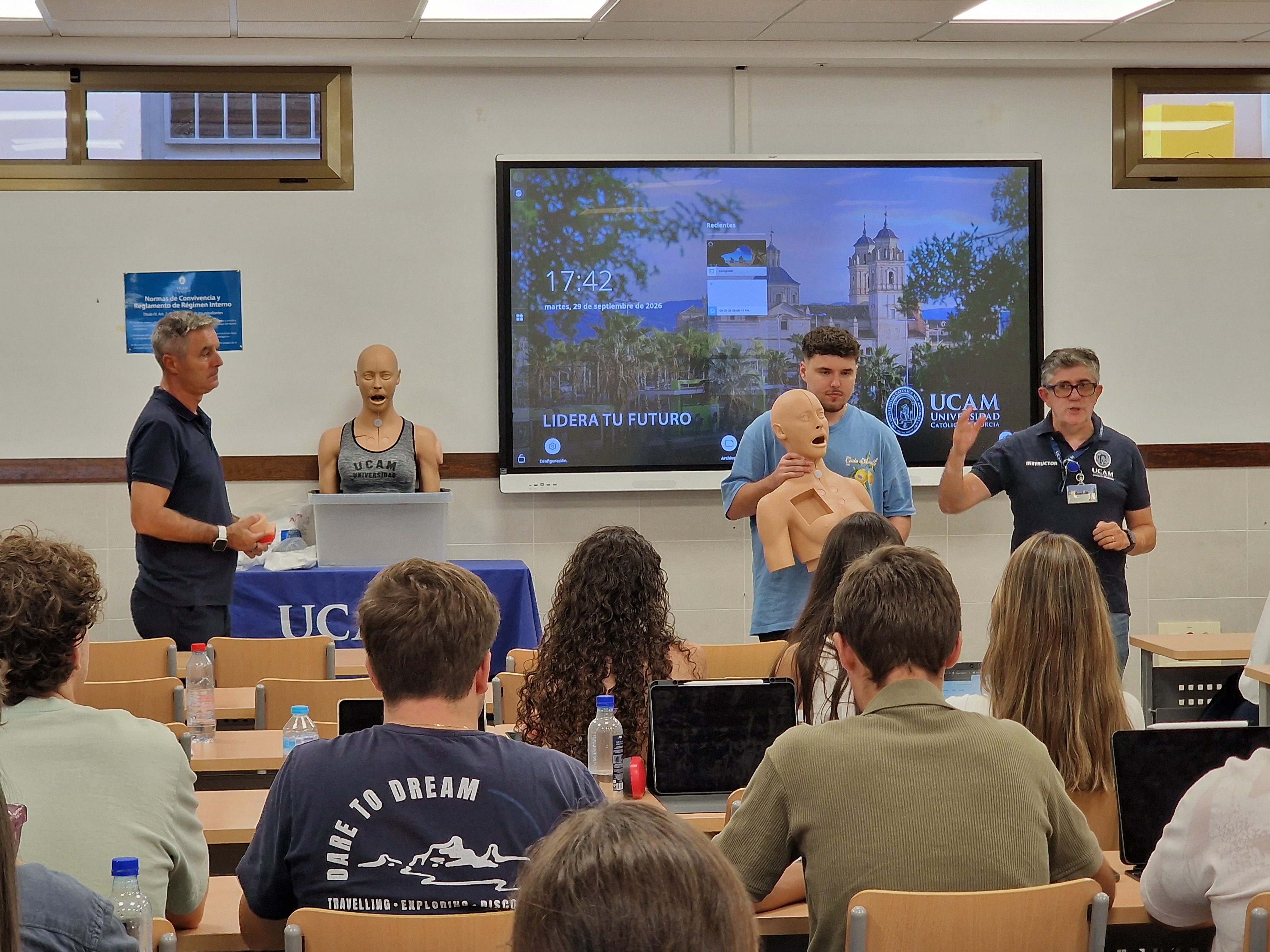
In a second phase, a website and an app connected to the simulator will help students develop clinical reasoning through cases in which they must choose the appropriate tests to reach a diagnosis. In this way, training will cover not only how to perform a procedure but also the decisions leading up to it.
Teaching staff will also be able to monitor students’ progress. Students will be able to record their practice sessions and submit them via the Virtual Campus for assessment. As Párraga explains, ‘we will be able to assess a skill recorded and performed in a student’s own home’. Practice away from campus will therefore form part of a structured academic process with defined objectives and assessment by teaching staff.
Students are well aware of the opportunity this presents. Raúl Palazón, a third-year student, hopes the simulator will help them ‘be better prepared for real-life clinical practice’. Fellow student María Mula highlights the value of practising before treating patients, ‘so that repeated practice on the simulator can help prevent mistakes’.
Leading the way in the use of new technologies
Hands-on training using cutting-edge technology is one of the keys to UCAM Medicine students’ success in Spain’s medical residency entrance examination (MIR) and to their performance as doctors in specialist training in hospitals. The new device represents a pioneering initiative in Spain, with few comparable examples internationally. It marks a new chapter in UCAM’s commitment to clinical simulation, which has been a fundamental part of health sciences education at the University for almost 20 years. The aim is for students to develop practical routines and learn to deal with both common cases and the most complex and unusual situations successfully.