

Mechanism Linking Age-Related Diseases Discovered: UCAM and Altos Labs Advance Regenerative Medicine Research
Can age-related diseases be slowed by restoring cellular identity? A scientific breakthrough presented by Juan Carlos Izpisúa and UCAM’s Geroscience Chair could transform the future of healthy aging
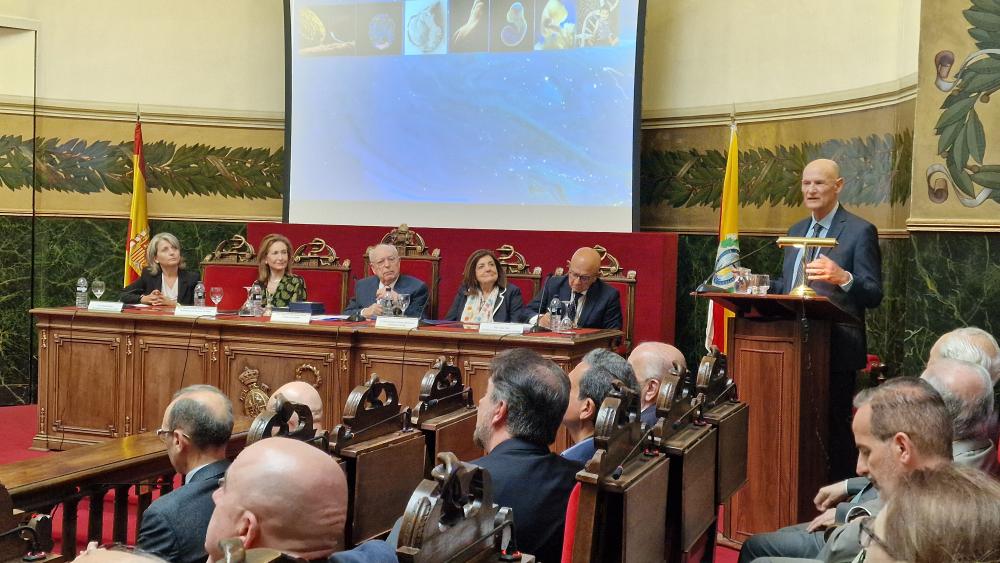

This breakthrough was presented by scientist Juan Carlos Izpisúa, Professor of Developmental Biology at UCAM and founder of Altos Labs, during a featured presentation at the Royal National Academy of Medicine of Spain (RANME). The event marked the official inauguration of the University’s Geroscience Chair, directed by Dr. José Viña.
Under the title "Geroscience: Regenerative Medicine and Longevity," the extraordinary scientific session revealed pioneering advances in the clinical application of rejuvenation research. Dr. José Viña announced the launch of a clinical trial for Alzheimer’s disease involving 240 patients. This milestone is supported by the UCAM Geroscience Chair, which the university has endowed with over one million euros and a team of world-class researchers.
The Discovery: "Mesenchymal Drift"
Izpisúa revealed that research conducted at Altos Labs, in collaboration with UCAM, has identified the loss of cellular identity as a critical driver of disease progression. The researchers identified a specific phenomenon termed "mesenchymal drift" as a root cause of inflammation and fibrosis across a wide range of human diseases.
"Our intention is not to revert adult cells to an embryonic state, but rather to realign the identity of those that have lost their specialization," Izpisúa explained. This process, known as partial cellular reprogramming, utilizes the controlled application of Yamanaka factors to restore cellular identity and potentially halt the progression of chronic age-related disorders.
Clinical Applications and Organ Restoration
The research extends beyond theoretical models. A proof of concept is currently underway at the Hospital Clínic de Barcelona, using animal models and donated organs discarded for transplantation. The goal is to restore organ functionality through these rejuvenation technologies, with initial results proving highly promising.
At a Glance: Key Takeaways
- New Biological Mechanism: "Mesenchymal drift" identified as a universal factor in aging and chronic disease.
- Partial Reprogramming: A technology to rejuvenate cells without losing their specialized function.
- Alzheimer’s Breakthrough: New peripheral biomarkers allow for disease detection via a simple blood test.
- Institutional Leadership: UCAM reinforces its position at the forefront of longevity and regenerative medicine.
Frequently Asked Questions (FAQ)
What is the difference between Lifespan and Healthspan? While lifespan refers to the total number of years lived, healthspan focuses on the years lived in good health, maintaining autonomy and vitality. This research prioritizes extending the quality of life over mere longevity.
How does Partial Cellular Reprogramming work? It "resets" the identity of aging cells to a more resilient, youthful state by using specific proteins called Yamanaka factors, preventing the cellular decline that leads to fibrosis and inflammation.
What is the objective of the UCAM Geroscience Chair? Directed by Dr. José Viña, this million-euro initiative is dedicated to interdisciplinary research, training future scientists, and developing preventive medical strategies for the elderly.