

Army pioneers the use of emerging technologies for casualty rescue
The project, developed by UCAM’s New Technologies for Health research group in collaboration with the ‘General Albacete y Fuster’ Marine Infantry School in Cartagena combines virtual reality and neuroscience to train military personnel in tactical medicine and combat rescue.
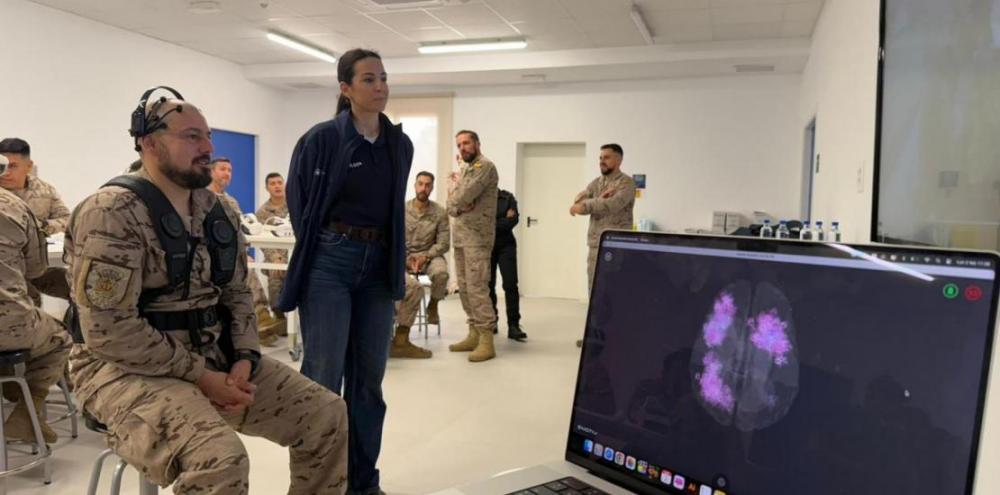

Can the brain be trained not to freeze in a real emergency? This is the question addressed by UCAM in the second phase of its virtual reality-based military training project, developed at UCAM Cartagena by the New Technologies for Health research group in collaboration with the ‘General Albacete y Fuster’ Marine Infantry School’.'
The initiative combines immersive simulation and applied neuroscience to prepare military personnel in tactical medicine, triage and the management of multiple casualties in high-pressure scenarios. In this new phase, participants have repeated the same virtual scenario up to three times, allowing researchers to analyse learning progression and determine how many attempts are required to achieve an effective response.
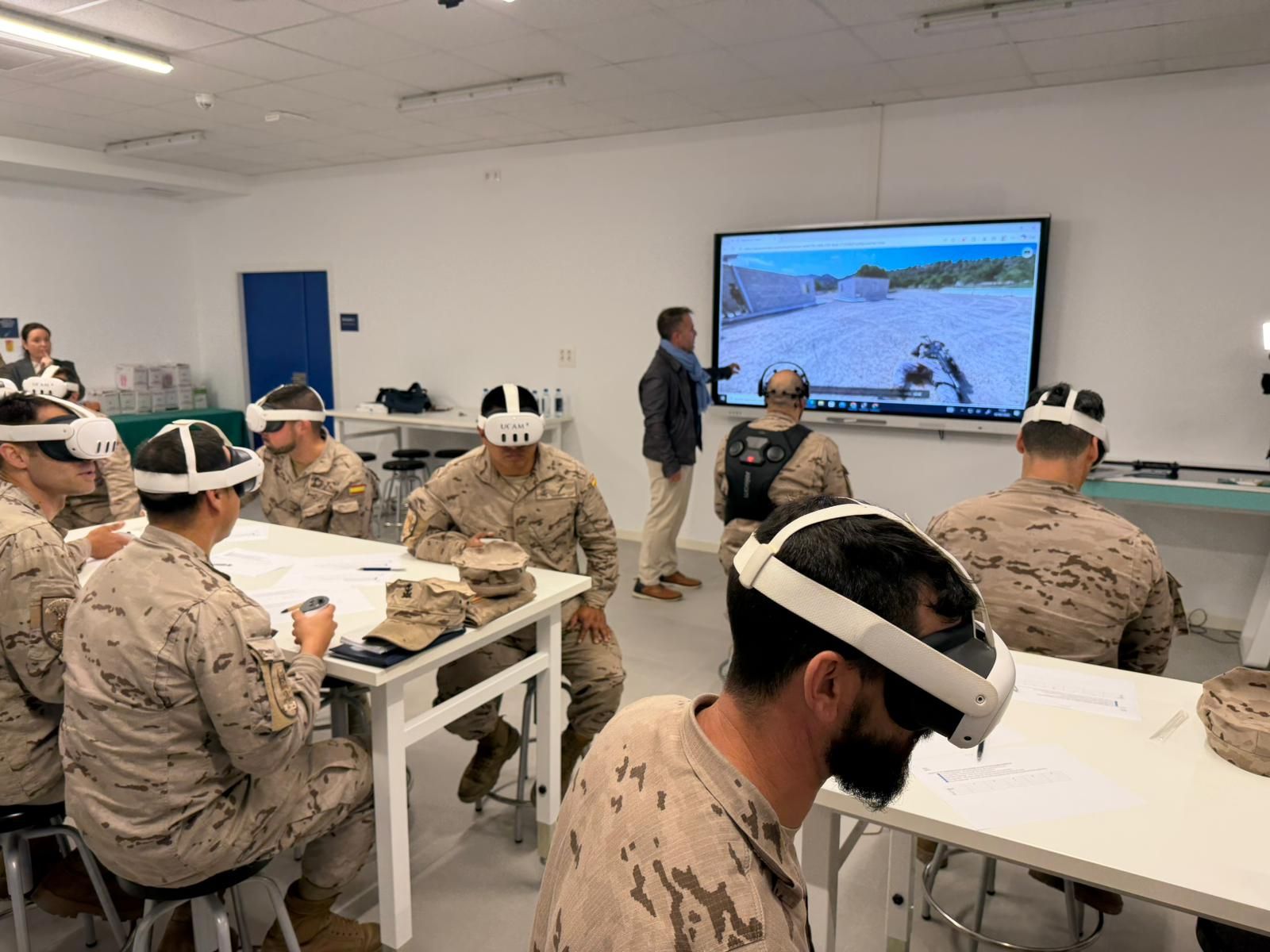
The scenarios, recorded at military facilities using 8K cameras, actors and cinematic make-up, recreate highly realistic emergency situations. Manuel Pardo, Professor at UCAM and project director, explains that ‘virtual reality allows us to train for disaster scenarios and military medicine in a safe environment, strengthening professional preparedness’.
The training is aimed at Marine Infantry personnel acting as first responders. According to Nereo Venero, a nursing captain in the Marine Infantry Corps, ‘having previously experienced the scenario helps to reduce mental blockage when facing a real emergency’. The project also incorporates neural helmets to analyse decision-making under stress. Carmen Amalia López, a doctoral researcher in the group and an emergency nurse, notes that ‘we measure levels of attention, concentration and stress in real time as the participant experiences the scenario’.
The initiative forms part of the collaboration between UCAM and the Armed Forces and is progressing towards national rollout, with the support of the Ministry of Defence and participation in NATO-related projects.