

UCAM-SENS to develop nanosensor for real-time single-cell monitoring
The new ‘AutoCellSens’ project, funded by the Spanish Government, will enable individualized measurement of cellular responses, advancing precision treatments for cancer and chronic diseases
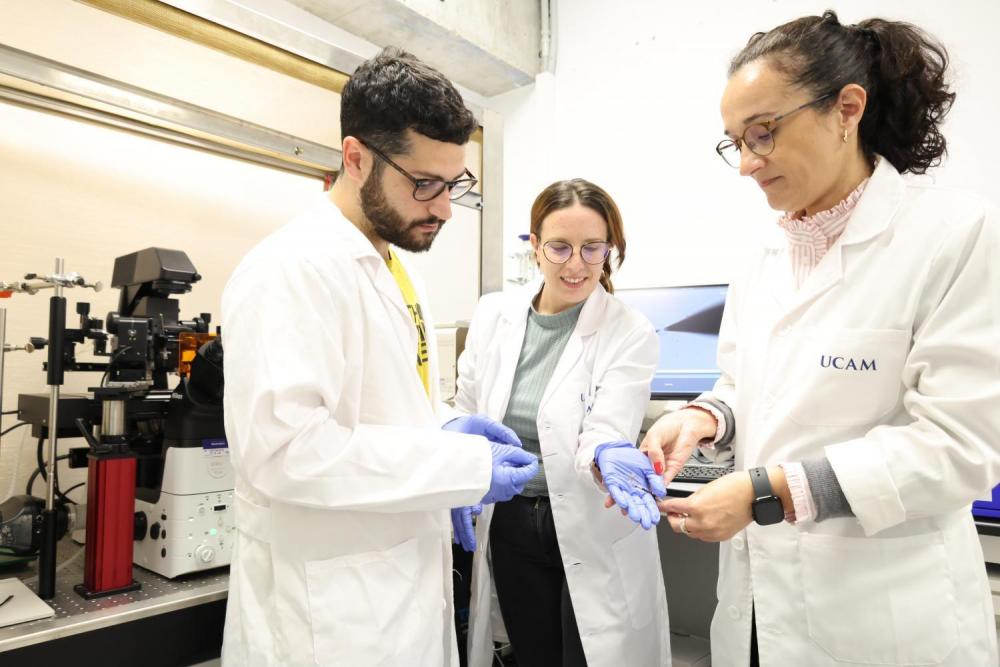

The UCAM-SENS unit at the Catholic University of Murcia has launched the project ‘Towards the automation of measurements at the single-cell level via electrochemical nanoprobes’ (AutoCellSens). Led by co-founder and researcher María Cuartero Botía, this new tool will allow the scientific community to study biological processes and treatment responses in pathologies such as cancer with unprecedented precision.
The study, funded by the Spanish Research Agency (AEI) under the Ministry of Science, Innovation, and Universities, has been awarded a budget of €169,400. It serves as a strategic continuation of the AEI’s "Close2Cell" Knowledge Generation project.
Automating the Future of Precision Medicine
The objective of AutoCellSens is to design and develop a nanosensor capable of autonomously monitoring biochemical processes at the single-cell level. This technology will facilitate:
- Automated and Standardized Measurement: Reducing costs and timeframes in the study of complex pathologies.
- Real-Time Monitoring: Providing direct data on how a patient responds to treatment and how a disease evolves.
- Dynamic Patient Profiling: Creating a more accurate map of the disease for each individual.
"This automated measurement capability will provide unprecedented insights into the progression of complex pathologies," says Águeda Molinero, a researcher on the project. "By monitoring how cells respond individually, we can obtain a dynamic profile of the disease for each patient, facilitating the design of much more precise and personalized treatments."